
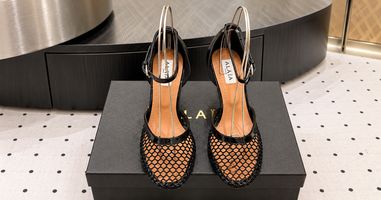
Alaïa Fishnet Ballerina Pumps: What Changes With the Heeled Version?
Alaïa Fishnet Ballerina Pumps keep the transparent upper and ballet-inspired character of the familiar fishnet style, but the added heel changes the shoe more than the name suggests. The rear sits higher, the side profile gains definition, and the strap becomes more noticeable as part of the construction rather than simply a detail across the foot.
They do not read as a flat with extra height. From the front, the ballerina reference is still obvious. From the side, the lifted heel pushes the shoe closer to pump territory.
That tension is the point. The mesh keeps the shoe visually light while the heel gives it a more deliberate stance.
1. The Fishnet Upper Looks Different Once the Rear Is Raised
The mesh remains one of the lightest-looking parts of the shoe. Skin shows through the net structure, so the upper never develops the solid visual weight of a conventional leather pump.
The heel changes the way that transparency is framed.
On a flat base, fishnet can feel easy and close to the ground. Once the rear is lifted, the same open upper sits against a more defined lower line. From the side, that contrast becomes especially clear: delicate mesh above, more structure underneath.
The heeled version therefore feels sharper without losing the openness that makes the fishnet design recognizable.
2. The Ballerina Reference Is Still There
The front does not suddenly stop looking ballet-inspired because height has been added.
With Alaïa ballerina pumps, the toe and upper still carry the softness associated with a ballerina shape, but the raised rear changes how the foot sits inside that outline.
Bare ankles make the difference easier to see. A flat keeps the foot visually close to the floor; the heeled version introduces a slight upward angle through the back of the foot.
It is enough to make the silhouette look more finished without pushing it into high-pump territory.
3. The 55mm Heel Sits in the Middle
A 55mm heel does not create the dramatic stance of a stiletto, and that is part of why it works here.
There is enough height to separate the shoe clearly from the flat version, but not so much that the mesh upper starts to look disconnected from the base.
Under trousers, the heel adds polish without becoming the first thing the eye notices. Under a skirt or dress, more of the side profile is exposed, so the lift becomes easier to read.
For someone deciding between the flat and heeled versions, this moderate height is the practical difference: noticeable enough to change proportion, restrained enough to preserve the ballerina character.
4. The Shape Still Fits the Wider Alaïa Footwear Language
The heeled fishnet model does not feel isolated from the rest of Alaïa shoes.
It uses the same broader ideas seen elsewhere in the footwear collection: exposed areas of the foot, controlled lines, compact details, and shapes that become more interesting as the viewing angle changes.
The mesh does not need heavy ornament. Most of the character comes from the relationship between openness and structure.
That connection helps the shoe feel familiar even though the heel gives the fishnet concept a different purpose.
5. The Strap Becomes More Important
On a flat shoe, a strap can easily read as a finishing detail.
Here, it has more visual work to do.
The front of the foot remains light and transparent, while the rear has been raised. The strap helps connect those two sections and keeps the upper from feeling detached from the heel.
From straight ahead, mesh and toe shape still dominate. Rotate the foot slightly and the strap becomes more noticeable as part of the shoe's construction.
It also preserves some of the Mary Jane and ballerina character that might otherwise be lost once the heel is introduced.
6. The Toe Reads Sharper From the Side
Raising the back of the foot changes how the front appears, even when the toe itself has not become dramatically longer.
The shoe now moves visually from a lower front toward a higher rear. That creates a clearer direction through the side profile.
Cropped trousers reveal the full relationship between toe, strap, and heel. Longer trousers often hide the rear, leaving only the front visible beneath the hem.
From that angle, the shoe can look quieter than it really is. The pump identity becomes clearer once the wearer moves and the heel comes back into view.
7. The Heeled Version Fills a Different Wardrobe Gap
A flat fishnet ballerina works naturally when the outfit benefits from low-profile footwear. The pump does something else.
Alaïa Fishnet Ballerina Pumps add enough height to sharpen tailored trousers, narrow skirts, and simple dresses without giving up the transparency of the mesh upper.
That makes them useful when a solid leather pump would feel too heavy but a flat would leave the outfit too grounded.
The distinction is practical as well as visual. A flat keeps the lower line relaxed; the heel introduces lift and a more finished side view.
Neither version replaces the other. They solve different proportion problems.
8. The Side Profile Shows the Biggest Change
From the front, the relationship to the classic fishnet ballerina remains obvious. From the side, the difference is much harder to miss.
The raised rear creates space between the sole and the ground, while the mesh continues to expose the top of the foot.
That contrast makes the profile more structured than the front view suggests. The strap also becomes easier to read because it is now positioned between a light upper and a lifted heel.
For a closer look at how the 55mm heel changes the shape, the side view tells more than a straight-on image.
It is where the pump identity becomes clearest.
9. Mesh Stops the Heel From Feeling Too Formal
A traditional pump often relies on a solid upper to create polish. Fishnet gives that polish a lighter surface.
The heel pushes the shoe toward dressier territory, but the transparent upper keeps the foot visually exposed.
With tailoring, that contrast can look especially precise: solid fabric above, open mesh below.
Softer skirts and dresses create a different effect, allowing the fishnet to blend more gradually into the outfit.
The heel provides structure; the mesh prevents that structure from becoming too severe.
10. Hem Length Decides Whether the Heel Is Part of the Look
A cropped trouser makes the pump construction obvious because the strap and heel remain visible.
Longer trousers change the reading. They may cover most of the rear and leave the fishnet front as the main visible feature, making Alaia Fishnet pumps look almost flat-like until the wearer takes a step.
Skirts offer more variation. A straight midi hem creates a controlled frame, while fuller fabric lets the heel appear and disappear as the skirt moves.
The useful question is not simply whether a hem is short or long. It is how different hems frame the shoe and whether the heel is meant to be seen.
That decision changes the role the pumps play in the outfit.
11. Fishnet Reacts to What Sits Around It
An opaque upper looks relatively consistent from outfit to outfit. Mesh changes more noticeably.
Against bare skin, the net pattern can appear softer and more continuous. Darker hosiery makes the structure more graphic.
The same principle applies to clothing nearby. Strong contrast between hem and shoe gives the lower line more definition. Similar tones let the transparency become the quieter detail.
That flexibility is useful because the shoe does not need a different color or finish to change character. The surrounding palette already does some of that work.
12. Flats and Pumps Are Not Interchangeable
The two versions share the same family resemblance, but they do not finish an outfit in the same way.
A flat emphasizes ease, closeness to the ground, and the ballet reference. The pump gives the rear more presence and creates a cleaner lift through the lower leg.
That is why Alaïa Fishnet ballerina shoes can make sense in more than one form within the same wardrobe.
Someone who already owns the flat does not necessarily gain a duplicate by choosing the heeled version. The difference is most obvious under longer skirts, tailored trousers, and looks where a little more lift changes the overall proportion.
The deciding point is when the heel is worth choosing, not whether one version is universally better.
13. The Heel Changes the Stance, Not the Core Idea
The heeled version keeps the qualities that make the fishnet ballerina recognizable.
The upper is still transparent. The strap still divides the top of the foot. The front still carries a ballet-inspired softness.
What changes most is the stance: the rear sits higher, the side view becomes more defined, and the shoe no longer reads as completely flat from a distance.
That shift is enough to give trousers, skirts, and dresses a different finishing line without turning the style into a conventional pump.
The heeled version works because it changes the balance rather than the identity. The original fishnet idea remains intact; height simply gives it another role.
Clara Bennett
Clara Bennett writes about designer shoes, focusing on materials, proportions, styling, and the small design differences that change how a pair looks and wears. Her articles look closely at individual styles and how they fit into everyday, work, and occasion dressing.