
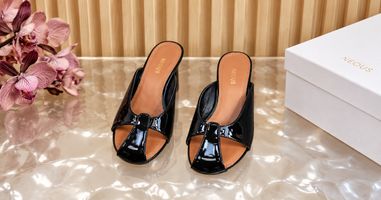
Are Neous Mules Comfortable and Practical for Everyday Wear?
Neous mules work best for someone who wants a clean, low-profile shoe that can move between tailored clothing and simpler everyday outfits. The main considerations are how securely the upper holds the foot, how the open back feels while walking, and whether the construction suits the amount of movement planned.
They make particular sense for office wear, dinners, short city outings, and wardrobes built around restrained proportions. Longer walking days deserve more careful judgment because an open-back design behaves differently from a sneaker, loafer, or enclosed flat. Fit, pace, surface, and expected wear time should all be weighed before styling becomes the deciding factor.
1. Start with How the Shoe Will Actually Be Used
Mules can look straightforward on a product page, yet small construction differences change the way they feel once worn. An open back removes one source of support, leaving the upper to do more of the work in keeping the foot connected to the sole.
That becomes more noticeable during repeated walking than during short periods indoors. A pair suited to an office or restaurant may feel quite different after several hours around the city.
How the shoe fits into the day matters more here than how simple the design appears at first glance.
2. Look at the Upper Before Judging the Overall Silhouette
With Neous women mules, how much contact the upper has with the foot deserves attention first. Greater coverage can create a more controlled feel, while a more open design makes fit across the front and instep more important.
Strap position matters as well. One sitting farther forward affects movement differently from one placed closer to the instep.
Images from several angles can reveal where the upper meets the foot and how much open space remains around it.
3. A Flat Profile Changes What Matters Most
A flat or very low profile removes some concerns linked to high heels, but it does not automatically make a mule suitable for extended walking.
Sole flexibility, upper placement, underfoot feel, and movement inside the shoe still count. The heel also remains free, creating a different stride from an enclosed design.
Once walking becomes quicker or more continuous, the important part is whether the foot remains settled rather than sliding or needing constant adjustment.
4. Jacqui Brings the Decision Down to Specific Construction
Within the collection, Neous mules show how a low-profile, open-back construction can keep the design visually light while placing more importance on upper placement and foot retention.
The Jacqui design makes those proportions especially easy to assess because its strap arrangement leaves much of the foot visible. That affects how securely the shoe stays in place during short walks, standing, and changes of direction.
The pared-back upper also makes proportion more noticeable. Trouser length, hem width, and the amount of visible foot can alter the overall effect considerably.
For someone considering this specific model, the product page provides the clearest reference for the available version before the broader guidance here is applied.
5. Foot Retention Matters More Than It Does in a Closed Shoe
Closed shoes may use a heel counter, back strap, or enclosed upper to keep the foot in position. A mule depends on a different balance.
If the front feels loose, the wearer may shorten the stride or grip more using the toes. Excess pressure across the upper creates the opposite problem.
A few steps while standing and moving will reveal more than simply checking whether the foot fits inside the sole.
6. Daily Comfort Depends on Distance, Surface, and Pace
How Neous Jacqui mules feel over the course of a day changes according to the amount and type of movement involved. Indoor flooring, short pavement sections, office movement, and dinner plans place different demands on footwear than uneven streets or several hours outside.
Someone already accustomed to open-back footwear may find the transition easier than a person who mainly wears sneakers, loafers, or enclosed flats.
Comfort is shaped by fit, walking time, surface, pace, and individual tolerance rather than one feature in isolation.
7. Decide Whether This Format Fits Your Routine
A minimal sandal-mule profile can suit a wardrobe where footwear is meant to complete an outfit without dominating it. Less enclosure, however, may feel less secure once the walking pace increases.
The fit and wearing notes examine that model-specific decision in greater depth, including where this type of construction tends to make the most sense.
If most use involves shorter city distances, indoor events, office settings, or evenings out, the format is easier to justify than when the shoe is expected to replace a dedicated walking pair.
8. Trouser Length Can Change the Whole Effect
Mules leave more of the foot exposed than loafers or pumps, making the transition between trouser hem and shoe part of the styling decision.
An ankle-length straight trouser keeps the construction visible. A longer wide-leg trouser covers more of the upper, allowing the shoe to become a quieter finishing element. Cropped denim creates more open space above the foot and changes the proportion again.
The main decision is whether the footwear should register clearly or simply complete the lower line of the outfit.
9. Minimal Styling Does Not Mean Every Outfit Works Equally Well
Because Neous mules sit comfortably within a cleaner design language, they can integrate easily into pared-back wardrobes. Some combinations still work better than others.
Heavy fabrics can visually overpower a light open shoe, while very casual clothing may create stronger contrast when the footwear has a more precise finish.
Tailored trousers, clean denim, column skirts, fluid dresses, and restrained separates tend to keep the balance more consistent.
Color affects that balance too. Tonal combinations emphasize proportion, while contrast creates a clearer break around the foot.
10. Work and Dinner Place Different Demands on the Same Pair
An office day may involve long periods of sitting broken up by short walks, stairs, meetings, and commuting. Dinner wear can involve less movement while putting greater emphasis on how the shoe sits beside trousers, skirts, or dresses.
For work, repeated movement deserves more weight. For dinner or an event, visual balance may become the stronger consideration.
A separate work-to-dinner wear analysis looks more closely at those differences.
The same pair can feel well suited to one setting and less convincing in another, even when the outfit itself works.
11. A Minimal Upper Can Make Fit More Visible
With Neous women mules, there is less material to disguise an imperfect fit than in many enclosed shoes.
If the foot extends noticeably beyond the intended area of the sole, the imbalance is easy to spot. Excess empty space can be just as visible.
The upper should also sit cleanly rather than appearing strained in one area and loose in another.
Front, side, and angled product images become particularly useful when making that assessment online.
12. Travel Use Requires a More Specific Decision
Mules can be convenient during travel because they are easy to put on and remove, but convenience does not automatically translate into all-day walking comfort.
Airports, hotels, meals, and short transfers can suit this type of footwear well. Long sightseeing days may call for something more secure depending on distance and terrain.
A more practical packing approach is to use the mule for polished parts of the trip and keep a walking-focused pair for higher-mileage periods.
13. The Best Choice Depends on What You Want the Shoe to Replace
Before choosing Neous mules, identify which pair already in the wardrobe they are expected to replace.
If that pair is a pump, dress sandal, or polished flat used for shorter periods, the transition can be fairly direct. If it is a sneaker worn for several hours of continuous walking, expectations need to change.
Thinking in terms of replacement makes it easier to tell whether the pair fills a real gap or simply repeats something the wardrobe already covers.
14. Build the Decision Around the Wardrobe You Already Wear
The strongest reason to choose this category is not that it works with every outfit. It is that the design can connect easily to clothes already worn on a regular basis.
Start with the trousers, denim, skirts, dresses, and jackets that appear most frequently. Then consider whether an open, low-profile shoe improves those combinations or creates another item that needs special styling.
For a more outfit-focused approach, the wardrobe pairing framework examines how this type of footwear works across different proportions and clothing categories.
The pair makes the most sense when its fit, walking demands, and proportions already match the way the wardrobe is used.
Clara Bennett
Clara Bennett writes about designer shoes, focusing on materials, proportions, styling, and the small design differences that change how a pair looks and wears. Her articles look closely at individual styles and how they fit into everyday, work, and occasion dressing.