
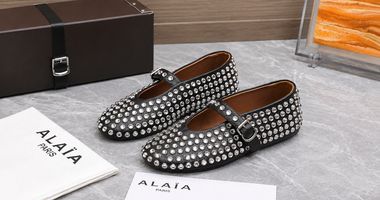
Alaïa Crystal Ballet Flats: What Makes Them Work Beyond Special Occasions
Alaïa crystal ballet flats bring a decorative finish to a familiar ballerina silhouette, making them suitable for selected daytime outfits as well as evening occasions. Their appeal comes from pairing reflective detailing with a low profile. Simple clothing provides the strongest contrast, although fit, walking conditions, and the durability of embellishments deserve careful consideration.
Unlike conventional occasion shoes, the design does not rely on heel height to create a dressier appearance. Its crystals draw attention while the rounded silhouette remains recognizable.
That combination raises an interesting wardrobe question: can footwear this decorative become something people reach for regularly?
1. A Different Interpretation of Ballet Footwear
Traditional ballet flats are valued partly because they demand little from an outfit. Their low construction works beneath trousers, skirts, and dresses without introducing a dramatic change in proportion.
Crystal embellishment alters that relationship. The shoes become a visible feature rather than a quiet finishing detail.
Exploring Alaïa ballerina shoes reveals how different materials can change the character of a similar silhouette. Mesh creates an open, textured appearance, while extensive crystal decoration draws attention to the surface itself.
For someone accustomed to plain leather flats, this design offers a different kind of versatility. Instead of blending into several outfits, it can give familiar clothing a more deliberate finish.
The question is less about whether embellished shoes are fashionable and more about whether their visual character suits the clothes already being worn.
2. Why the Rounded Front Makes a Difference
A rounded toe softens the appearance of decorative footwear. Its curved outline contrasts with the brilliance of the stones, preventing the silhouette from looking as severe as a sharply pointed evening shoe.
Trouser length can change how this relationship appears.
A wide hem covering most of the upper hides the shoe's recognizable outline. Cropped trousers reveal the rounded front and more of the decoration, making the footwear considerably more noticeable.
The difference is easy to overlook when evaluating shoes separately from clothing.
Someone who prefers long, flowing trousers may see only flashes of the crystals while walking. A person wearing ankle-length tailoring will reveal more of the design, even while standing still.
Neither effect requires changing the shoe. The clothing determines how much of its character becomes visible.
3. What Product Photographs Cannot Fully Show
Studio lighting can make crystal-covered footwear appear exceptionally brilliant. Directed light produces concentrated reflections that may be less pronounced in an ordinary room.
Photographs of Alaïa ballet flats are therefore most informative when they show several viewing conditions rather than one carefully illuminated angle.
Close-up images can reveal the arrangement of decorative elements. Side views help establish the profile, while photographs showing the shoes beneath clothing give a better indication of their scale.
Daylight deserves particular attention. It reveals differences between the reflective stones and the material beneath them, making the surface easier to assess.
A bright product image may capture the decoration beautifully but reveal little about its appearance beneath a trouser hem.
For a design whose appeal depends heavily on surface detail, those distinctions are useful before making a selection.
4. Giving Ordinary Clothing a Different Finish
Consider straight dark denim, a white cotton shirt, and a lightweight jacket. Nothing about the combination requires formal footwear.
Crystal decoration introduces a deliberate contrast without changing the clothes themselves.
The effect also works in the opposite direction. Tailored trousers and a fine sweater can appear less conventional when paired with a shoe that carries a substantial decorative finish.
There is no need to repeat the crystals in jewelry or a bag. Doing so may make the outfit feel more coordinated than intended.
A useful starting point for everyday outfits with crystal footwear is to keep the clothing familiar and allow the shoes to provide the unexpected detail.
Washed denim is particularly interesting because its uneven, matte texture contrasts with the reflective surface. A sharply pressed trouser creates a cleaner relationship, allowing the footwear to contribute most of the decoration.
Both combinations can work, but they communicate different attitudes toward dressing.
5. Why the Amount of Decoration Matters
A shoe carrying a small ornament behaves visually differently from one with crystals distributed across much of the upper.
An isolated detail draws the eye toward one area. More extensive embellishment changes the appearance of the entire shoe, making its surface visually active even when the silhouette remains simple.
This is especially apparent in Alaïa crystal ballet flats, where decoration is central to the design rather than a minor finishing accent.
The crystals create numerous small reflective surfaces. Movement changes which details catch the light, giving the footwear an appearance that shifts subtly from one angle to another.
A plain metallic buckle would not produce the same effect.
Extensive decoration also changes the relationship between shoes and accessories. A heavily detailed bag can compete for attention, while a smooth leather bag gives the embellished surface more room to stand out.
The amount of decoration already present on the footwear should influence those choices.
6. Daytime Wear Is More About the Setting
An afternoon gallery visit and a long walk across uneven city streets may call for similarly casual clothes, but they place different demands on footwear.
Crystal-covered flats can look appropriate in both settings. Their practical suitability is another matter.
For an indoor lunch, charcoal trousers and a soft knit provide a restrained background for decorative shoes. A short journey followed by time indoors may also reduce exposure to rough surfaces.
A full afternoon of walking introduces greater contact with pavement, steps, and crowded surroundings.
That difference is worth considering before treating embellished footwear as an unrestricted everyday option.
Carrying the shoes and changing on arrival may be sensible for certain plans. It allows the wearer to enjoy the design at the destination without requiring it to withstand every part of the journey.
7. Construction Deserves a Closer Examination
Crystal decoration can dominate a product photograph, leaving less visible details overlooked.
Before choosing Alaïa crystal embellished ballet flats, examine the particular version's upper material, lining, sole, and fastening. Similar-looking styles may have different specifications.
A buckle strap, where included, deserves attention beyond its appearance. It should help secure the shoe without placing excessive pressure across the instep.
The front also needs sufficient room for natural foot movement. An embellished upper should not be assumed to stretch like an undecorated leather shoe.
Another consideration is how the crystals are attached. Product photographs may show their arrangement, but cannot establish long-term resistance to abrasion or impacts.
Inspecting the decoration and following the care instructions are more useful than assuming every crystal-covered design will tolerate the same conditions.
A good fit and suitable construction matter more during wear than they do in a photograph.
8. The Route Matters as Much as the Destination
Picture two dinner plans.
The first involves a short car journey, a restaurant with smooth indoor flooring, and a direct trip home. The second begins with an hour of walking, several public transportation connections, and dinner afterward.
The same decorated flats might complement both outfits. Yet the second itinerary exposes them to considerably more friction and unpredictable surfaces.
Crystal embellishments deserve particular care around abrasive materials, heavy foot traffic, and wet conditions.
This does not mean the shoes must be reserved exclusively for special events. It means their use should reflect the actual demands of the day.
For someone who spends most of an occasion indoors, the difference may be modest. A person who walks extensively before arriving may prefer an additional pair of shoes for the journey.
Considering the route in advance is more practical than judging footwear suitability solely by the event's dress code.
9. A Three-Outfit Test Before Choosing
One attractive styling photograph cannot establish whether decorative footwear will work across an existing wardrobe.
A better exercise is to select three outfits already owned.
Start with dark jeans and a plain sweater. Add tailored trousers and a cotton shirt as the second option. For the third, consider an uncomplicated dress without prominent decoration.
Now examine what crystal ballet flats would contribute to each.
With denim, the stones provide contrast against a casual fabric. Tailoring creates a more polished setting, while the dress allows the footwear to carry much of the visual detail.
The outfits also reveal practical differences. A long trouser hem may conceal the decoration, whereas a dress makes the entire shoe more visible.
If all three combinations suit realistic plans, the shoes have several possible uses. If only one feels convincing, their purpose is likely more specialized.
That is useful information before introducing another distinctive piece into the wardrobe.
10. Comfort Cannot Be Judged While Standing Still
A shoe may feel secure during a brief fitting but behave differently once the wearer begins walking.
The toes need sufficient room, the heel should remain reasonably stable, and any strap must sit comfortably across the foot.
A practical discussion of how ballet flats fit while walking should include several ordinary steps rather than relying entirely on a standing fit.
Notice whether the heel rises excessively, whether the foot slides forward, or whether the upper creates pressure near the toes.
A decorative surface adds another reason to avoid relying on future stretching to correct a poor fit. Even when the underlying material is leather, embellishment may affect how the upper responds to movement.
Check both feet, since their dimensions can differ.
A comfortable shoe should not require constant adjustment during a short indoor walk. If the fastening or front becomes distracting almost immediately, appearance should not override that concern.
11. Fabric Texture Can Change the Whole Outfit
Color is not the only relationship worth considering when pairing embellished shoes with clothing.
Wool absorbs light differently from satin, while washed denim introduces a slightly irregular surface. Each fabric changes how prominently crystals appear.
Satin creates an especially interesting pairing for Alaïa crystal flats because both surfaces can reflect light. The result may feel more expressive than the same shoes worn beneath matte trousers.
That does not make reflective fabrics unsuitable. It simply leaves less room for additional decoration.
A plain knit, smooth jacket, or restrained bag can help keep the combination visually coherent.
Fabric weight also affects proportion. A heavy trouser falling over the shoe creates a different impression from a fluid skirt that reveals the upper during movement.
Rather than coordinating every accessory, consider which material should attract attention first.
12. Making Room for Something Distinctive
A wardrobe filled with understated shoes may benefit from one decorative alternative. For someone who already owns several embellished pairs, the addition needs a more specific purpose.
The distinction becomes clearer when considering actual plans.
Indoor gatherings, dinners, and occasional celebrations provide reasonable opportunities for expressive footwear. Extensive outdoor walking and unpredictable weather make the decision less straightforward.
Maintenance is another consideration. Delicate surfaces should be stored carefully, protected from unnecessary rubbing, and cleaned according to the product's care instructions.
These requirements are not unusual for decorative footwear, but they matter when deciding how frequently a pair will be worn.
A useful wardrobe addition does not necessarily need to be worn every week. It should, however, offer a recognizable benefit when the appropriate occasion arrives.
13. Moving Between Casual and Dressier Settings
Black trousers, a fine sweater, and a restrained bag can work for an afternoon appointment. The same clothes may suit dinner without much alteration when the footwear provides a more decorative finish.
Styled this way, Alaïa crystal ballet flats introduce an evening-ready detail without depending on heel height.
The change is especially effective when the clothing remains understated. A heavily embellished top or ornate bag may compete with the shoe rather than complement it.
For readers considering evening outfits built around embellished flats, the event's expectations still matter. A relaxed dinner or private celebration offers different possibilities from an occasion requiring a particular dress code.
Crystal decoration does not automatically make every combination formal. It provides a tool for adjusting how an outfit is perceived.
The most convincing use may be surprisingly simple: familiar trousers, an uncomplicated top, and footwear that catches the light just enough to make the combination feel different.
Clara Bennett
Clara Bennett writes about designer shoes, focusing on materials, proportions, styling, and the small design differences that change how a pair looks and wears. Her articles look closely at individual styles and how they fit into everyday, work, and occasion dressing.