
Who Are Alaïa Shearling Mary Jane Flats Best Suited For?
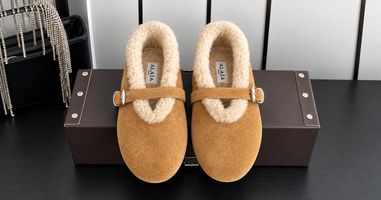
Alaïa shearling Mary Jane flats make the most sense in wardrobes already built around textured autumn and winter clothing but still in need of a low shoe. Suede, pale shearling, a rounded front, and metallic hardware give the pair more character than a plain ballerina without turning it into heavy footwear.
Denim, wool, knitwear, relaxed pieces, skirts, and subdued colors all give the design something to connect with. A wardrobe dominated by strict businesswear or very lightweight clothing offers fewer obvious openings.
The more useful question is how naturally the materials fit into clothes and footwear habits already in place.
1. Texture Gives the Pair an Easier Starting Point
Wool, denim, suede, brushed fabrics, and knitwear create a comfortable setting for the shoe. Nothing needs to match the shearling exactly; nearby materials simply need enough surface variation for the trim to feel connected rather than isolated.
A very sleek wardrobe produces a stronger contrast. In that setting, the footwear becomes a more deliberate focal element.
That contrast can still work well, but it should feel intentional rather than accidental.
2. Neutral Palettes Leave More Options
Black, charcoal, cream, brown, stone, navy, olive, and muted burgundy all sit easily around the dark upper and pale edging.
Deeper shades can connect to the suede, while lighter clothing can pick up the trim.
A wardrobe built largely from subdued colors therefore has several ways to absorb the shoe without depending on exact matching.
Brighter palettes are possible too, although they make the contrast around the foot more pronounced.
3. More Detail Than a Basic Flat Can Be Useful
Plain leather ballerinas tend to stay quiet in an outfit. This pair does not.
Texture around the opening and a reflective fastening give Alaïa Mary Jane shoes a stronger presence while the sole remains low and simple.
That works especially well when clothing itself stays restrained. Clean trousers and knitwear do not need print or additional decoration once the footwear is contributing enough detail.
The effect remains controlled because the design does not rely on an oversized sole, exaggerated toe, or large ornamental hardware.
4. Shoes Can Create Variety Without Changing the Wardrobe
Some wardrobes change mainly through new clothing. Others get more mileage from familiar pieces by changing shoes and accessories.
This pair suits the second approach. Dark trousers and a simple knit can take on a different character once shearling and metallic hardware enter the combination.
That can make the shoe particularly useful for someone who repeats core pieces but does not want those outfits to feel identical each time.
5. Existing Flats Can Strengthen the Case for This Pair
Owning leather or mesh ballerinas does not automatically make another flat redundant.
The more important question is whether the new pair behaves differently in the wardrobe.
Here, shearling and suede immediately separate the shoe from cleaner constructions.
The strap creates another distinction without changing the familiar low profile.
If several existing pairs already use plush trim, dark suede, and Mary Jane construction, the gain becomes smaller. If the current collection is mostly smooth and understated, this design fills a more obvious gap.
6. Frequent Flat-Wearers Will Find More Opportunities
A shoe like this is easier to justify when low footwear already appears regularly in everyday dressing.
Someone accustomed to that proportion can move into Alaïa shearling ballet flats without adjusting to a new heel height or bulky sole. The difference comes primarily from the upper and materials.
That matters because an unusual design only becomes useful when the underlying format fits existing habits.
A wardrobe dominated by pumps, boots, or sneakers may leave fewer natural openings, even if the shoe itself is appealing.
7. The Shearling Needs to Feel Like a Feature
The pale border is difficult to ignore. It does not disappear once the shoe is worn.
For someone who already likes tactile footwear, that visibility can be part of the appeal. For someone drawn to very clean uppers and minimal contrast, it may feel too prominent regardless of how well the colors fit the wardrobe.
Personal tolerance for visible texture therefore matters more here than it would with a simple leather flat.
8. Detail Near the Foot Should Feel Comfortable
The upper carries two strong elements: pale shearling around the opening and metal across the darker suede.
Anyone who prefers footwear to stay almost invisible may find that combination unnecessary.
With simple clothing, however, those details can take over some of the work normally done by print, jewelry, or a more decorative bag.
The shoe then becomes the finishing element rather than another neutral piece disappearing beneath the outfit.
9. Matte Fabrics Give Suede More to Work With
Glossy leather, satin, and technical fabrics create a noticeably sharper contrast against the upper.
Denim, wool, matte leather, and softer knits give Alaïa suede Mary Jane flats surfaces that feel more closely related.
Everything around the shoe does not need to stay matte. One polished piece can make the suede more noticeable without making the overall material mix feel disconnected.
10. The Shoe Can Be the Starting Point
Some shoes are added after the outfit is already decided. This one can provide the first cue.
Dark suede may lead toward charcoal or black trousers.
The pale edging can suggest cream, oatmeal, or softer neutral knitwear.
Metallic hardware can connect quietly to a bag clasp, watch, or restrained jewelry.
None of those details has to be copied exactly. Starting from the shoe simply gives the outfit an initial direction, which can be useful when small material differences create most of the variation in a wardrobe.
11. One Distinctive Pair Can Be More Useful Than Several Similar Flats
A tightly edited shoe collection does not always benefit from another plain ballerina in a slightly different finish.
For someone who prefers fewer but more differentiated choices, Alaïa Mary Jane flats can occupy a clearer position because the strap, suede, and shearling are immediately identifiable.
That separation matters when judging whether the pair genuinely expands the wardrobe.
If another shoe already delivers nearly the same profile and mood, the practical gain becomes smaller. If existing flats are smooth and restrained, the difference is much clearer.
12. Check the Shoe Cabinet Before Adding Another Similar Role
The most useful comparison may be with shoes already owned rather than with other versions seen online.
A black suede flat with a strap could already overlap partly with this role.
A shearling-trimmed ballerina would come even closer.
Smooth leather flats, loafers, sneakers, and boots leave a clearer opening because they solve different wardrobe needs.
The question is not whether two pairs look identical. It is whether they would repeatedly be chosen for the same outfits and for the same reason.
That distinction reveals whether the new pair adds a genuinely different option or simply another variation of an existing favorite.
13. The Best Fit Comes From Existing Habits
The strongest match is a wardrobe where low shoes already get regular wear and tactile materials are part of normal dressing.
In that setting, Alaïa shearling Mary Jane flats do not demand a new styling formula. They can enter clothing habits that already include denim, knitwear, wool, simple skirts, and quieter colors.
The shearling supplies a more noticeable surface, while the low base keeps the familiar proportions of a flat. Metallic hardware adds another point of difference without changing how the shoe functions.
A useful final test is simple: if the pair complements habits already established rather than requiring new ones, it has a much clearer place.
Clara Bennett
Clara Bennett writes about designer shoes, focusing on materials, proportions, styling, and the small design differences that change how a pair looks and wears. Her articles look closely at individual styles and how they fit into everyday, work, and occasion dressing.