
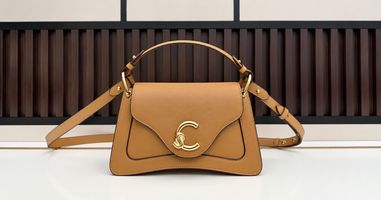
How Practical Is the Coccinelle Arlettis for Everyday Carry?
Coccinelle Arlettis handbag works well for everyday carry when the goal is a compact, defined silhouette rather than maximum capacity. Practical value comes from usable space, controlled proportions, flexible carrying choices, and an exterior that stays polished during regular use.
Arlettis is therefore less about fitting everything inside and more about deciding which essentials deserve space. Organization, object size, carrying position, and daily routine matter more than exterior dimensions alone.
1. Compact Capacity Encourages Better Priorities
Compact formats make daily packing more selective. Larger totes can absorb extra belongings almost automatically, while smaller interiors encourage a clearer distinction between essentials and occasional items.
That difference can be useful for routines built around lighter movement. Fewer unnecessary objects usually mean less interior clutter and a more predictable load.
Phone, cardholder, keys, small personal items, and a few extras can remain manageable without turning the bag into general storage for the day.
The benefit is not maximum volume. It is knowing exactly what the bag is meant to carry and keeping that purpose consistent.
2. Everyday Use Depends on Item Size
Capacity is not only about how many objects fit. Their dimensions and rigidity matter just as much.
A slim wallet uses space differently from a thick continental wallet. Compact cosmetics take up less room than several bulky cases, while sunglasses can consume surprising space when stored inside a rigid case.
The most useful way to judge Arlettis is therefore to consider what actually travels inside most days.
Two people may carry a similar number of objects yet experience the interior very differently.
3. Organization Determines How Space Is Used
Limited interior room becomes more effective when each object has a clear place.
The practical character of Coccinelle Arlettis bag becomes easier to appreciate when larger pieces are positioned first and smaller essentials fill the remaining space rather than being scattered throughout the interior.
Bulky items can quickly reduce flexibility, so keeping the layout simple usually works better than trying to use every available corner.
This approach makes the interior feel more intentional and prevents compact capacity from becoming unnecessarily restrictive.
4. Defined Construction Keeps Contents Predictable
Soft bags may change considerably as objects move around inside. More defined construction keeps the interior arrangement easier to anticipate.
That helps when the same essentials are carried repeatedly. Once a useful arrangement is established, belongings are less likely to shift into completely different positions every time the bag moves.
The exterior benefits as well. Contents are less likely to dictate the outer silhouette, helping the profile stay closer to its intended form.
For regular use, that consistency can matter more than extra unused space.
5. Weight Matters as Much as What Fits
What technically fits inside is not always what feels comfortable to carry.
Dense items can make a compact bag feel heavier than expected because the load is concentrated in a smaller body. That changes the experience even if the interior still closes easily.
Keeping weight under control helps the bag remain comfortable through longer periods of walking, standing, or moving between locations.
It also makes switching between carrying methods less noticeable. The bag can move from hand carry to another position without the load becoming distracting.
Comfort therefore depends on weight distribution as much as capacity.
6. Leather and Daily Handling Work Together
Daily handling has a direct effect on coccinelle leather bag surfaces, especially through contact with clothing, frequent opening, and placement on different surfaces.
Smooth leather keeps the outline clean and allows the defined body to stay visually prominent. Regular use can gradually influence how the surface looks and feels, so everyday habits still matter.
Keeping sharp or abrasive objects away from the exterior can help preserve the finish. The same applies when placing the bag on rough flooring or crowded surfaces.
Material care does not need to dominate daily use, but small habits can help preserve a polished appearance over time.
7. Carrying Options Support Different Parts of the Day
The most useful carrying position can change as the day develops.
Hand carrying gives direct control and works well during shorter stops, meals, or situations where the bag is frequently set down and picked up again.
A longer carrying position becomes more useful during commuting, shopping, walking, or other periods when both hands need to remain free.
This flexibility means the bag does not have to serve every part of the day in exactly the same way.
Switching between positions can make the same compact format feel more practical without changing what is packed inside.
8. Easy Access Depends on Retrieval Order
Interior organization and quick access are related, but they are not the same thing.
Frequently used pieces should sit where they can be reached without moving several other objects first. Less frequently used items can occupy deeper or less convenient areas.
Compact interiors make this retrieval order especially important because even a small amount of rearranging can interrupt the flow of use.
Once that order becomes familiar, reaching for cards, keys, or other essentials becomes more automatic.
The result is a smoother daily experience without adding more space.
9. Practicality Depends on the Routine
Daily usefulness depends on whether capacity matches normal habits rather than occasional high-volume days.
coccinelle bag designs in a compact format make more sense for routines built around smaller essentials and lighter movement. People regularly carrying documents, large bottles, electronics, or several bulky accessories may need something larger for those situations.
The Arlettis handle version provides a useful reference for judging how this compact format matches an everyday routine: https://www.bniox.com/products/coccinelle-arlettis-handle-bag-cca04
Its usefulness is easier to judge against the actual belongings carried every day than against capacity as an abstract number.
10. Travel Use Depends on the Bag’s Role
Compact handbags can work well during travel when they serve as the easy-access layer rather than the only bag being carried.
Passports, cards, phone, small personal items, and other frequently needed pieces benefit from staying close instead of disappearing inside larger luggage.
The smaller body is also easier to manage in restaurants, shops, transport, and crowded public spaces.
Travel days involving larger electronics, clothing, or bottles are better handled by pairing Arlettis with a larger carryall instead of expecting one compact format to cover every need.
11. Repeated Use Reveals What Matters Most
Practical value becomes clearer after the same bag has moved through ordinary routines.
Important qualities are usually straightforward: easy access, manageable weight, consistent form, and carrying methods that suit the amount of movement involved.
Smooth performance during workdays, errands, short trips, and social plans can make compact capacity more useful than expected.
Daily routine ultimately reveals more about practicality than maximum interior volume.
12. Crossbody Wear Changes How the Bag Behaves
Using coccinelle crossbody bag styling changes the relationship between the bag and the wearer. The body stays closer during movement, reducing the need to hold or reposition it repeatedly.
That difference becomes especially noticeable during longer walks, shopping, public transport, or travel between multiple locations.
Crossbody placement can also make compact proportions feel more natural because the bag stays secure without creating much bulk against clothing.
Hand carrying still gives the Arlettis a more polished presentation, while crossbody wear emphasizes mobility and convenience.
The two approaches therefore serve different needs: one highlights presentation, while the other prioritizes hands-free movement.
That flexibility strengthens everyday usefulness without forcing the bag into a single carrying routine.
Clara Bennett
Clara Bennett writes about designer bags, focusing on materials, construction, proportions, capacity, and carrying options. Her articles look closely at how individual designs work in daily life, from interior organization and strap configurations to size, structure, and suitability for work, travel, and other occasions.