
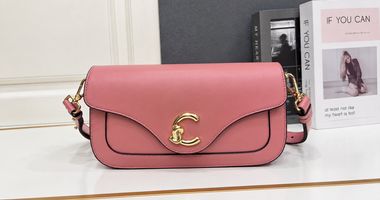
How the C-Me Flap and Shoulder Carry Change the Wearing Experience
Coccinelle C-Me bag feels most distinctive once it is worn rather than viewed on a shelf. The flap, shoulder position, compact body, and strap behavior affect how the bag moves, stays close to the torso, opens during the day, and feels after several hours of use.
Those details matter because shoulder carry is rarely static. Walking, sitting, reaching, commuting, and repeatedly opening the bag all change the experience. C-Me works best when the wearer values a close carrying position and a front structure that remains composed while the body moves naturally.
1. Movement Changes the Way the Bag Feels
Shoulder bags are constantly responding to the wearer. Every change in pace or direction slightly shifts the body, even when the bag appears stable while standing still.
C-Me benefits from relatively contained proportions. Less mass means less swinging during short walks, turns, or quick changes in direction.
The difference becomes more noticeable in busy environments. Moving through a station, stepping around other people, or getting into a car is easier when the bag stays close instead of projecting far from the torso.
Sitting also reveals whether the format works comfortably. The body may need to slide forward, move toward the side, or be repositioned before settling into a seat.
These small adjustments say more about daily usability than a static front view.
2. The Flap Creates Its Own Access Rhythm
Opening and closing become repeated actions once the bag enters a normal routine. Phone, cards, keys, earbuds, and other essentials may be reached several times within only a few hours.
The flap on Coccinelle C-Me flap bag introduces a clear sequence: steady the body, open the front, reach inside, and close it again. With repeated use, that sequence becomes familiar rather than feeling like a separate task.
Where frequently used items sit makes a noticeable difference. Essentials positioned near the easiest access area reduce the need to search through the interior each time.
Less-used pieces can sit deeper inside without affecting the rhythm of the day.
The flap therefore has a practical role beyond its visual identity. It influences how quickly the wearer develops a repeatable routine around the bag.
3. Strap Stability Matters During Longer Walks
A shoulder strap can feel perfectly comfortable for a few minutes and behave differently after sustained movement.
Walking introduces repeated vertical motion. If the strap shifts easily, the wearer may need to reposition it more often than expected. A more settled position requires less attention and allows the bag to move as part of the body rather than as a separate object.
Clothing texture also changes friction. Smooth fabrics may allow more movement along the shoulder, while textured knitwear or certain outer layers can hold the strap more firmly.
The useful test is not whether the strap stays completely still. It is whether any movement remains predictable enough that constant adjustment is unnecessary.
That difference becomes important during commuting, shopping, or days spent mostly on foot.
4. Body Contact Affects Comfort More Than It Seems
Where the bag rests against the torso determines how much pressure and movement the wearer notices.
A compact body can sit closer without creating the bulky sensation of a larger shoulder format. The contact point remains relatively contained, especially when the interior is not overloaded.
Weight distribution matters here. Dense items gathered in one area can make the body pull differently, even when total capacity has not changed much.
Keeping the load reasonably even helps the bag stay more settled during movement.
This is one reason packing habits can change the wearing experience without changing the bag itself.
5. Shoulder Carrying Depends on More Than Strap Length
Length is only one part of the equation. Strap placement, body depth, total weight, and where the bag meets the torso all influence how natural shoulder carry feels.
Coccinelle shoulder bag use becomes more comfortable when these elements work together rather than forcing the wearer to compensate for an awkward position.
A compact body generally needs less room to settle. That can make short transitions—walking into a shop, standing in line, stepping onto transport—feel easier because the bag requires less repositioning.
Longer wear reveals a second consideration: pressure concentration. Even a small bag can become noticeable if heavy objects create an uneven load.
Keeping contents selective therefore supports both capacity and comfort.
6. Reaching Inside Should Not Disrupt the Whole Bag
Access feels easiest when opening the flap does not require completely changing the carrying position.
During normal use, the wearer may steady the body with one hand, open the front, retrieve something, then return the bag to the same position. The fewer unnecessary movements involved, the more natural that sequence becomes.
Frequently used pieces benefit from predictable placement. Keys buried beneath larger items can turn a simple action into repeated rearranging.
A small interior often rewards consistency. Once the wearer knows where each essential sits, access becomes faster without needing additional compartments or excess capacity.
That familiarity is one of the practical benefits that only appears after repeated use.
7. A More Complete Carrying Profile Appears Over Time
Initial impressions usually focus on the flap and front hardware. Several hours of wear reveal a different set of qualities: how close the bag remains, how often the strap shifts, and how easily the wearer can reach inside without stopping.
Coccinelle C-Me shoulder bag becomes more convincing when these parts of the experience work together.
The compact body helps reduce unnecessary movement, while the flap keeps the opening controlled. Strap placement determines how naturally the bag settles back into position after access.
Those interactions matter more than any single feature by itself.
A shoulder bag that behaves predictably is easier to forget about while moving, and that can be a stronger sign of comfort than softness alone.
8. Sitting, Standing, and Moving Require Different Positions
One carrying position rarely works perfectly for every moment of the day.
While standing or walking, the bag can remain beside the torso. Sitting may require moving it slightly forward, behind the arm, or onto the lap depending on the space available.
Restaurants, cars, public transport, and office seating each create different constraints.
Compact proportions help because the body can be repositioned without taking up much room. The wearer does not need to treat the bag like a large object that must be completely removed every time the environment changes.
These transitions are ordinary, but they strongly influence whether shoulder carry feels effortless or intrusive.
9. The Flap Helps Keep the Front Controlled During Motion
Movement naturally softens the visual impression of a shoulder bag because the body shifts against clothing.
The defined front of Coccinelle flap bag styling provides some visual stability during that movement. The flap remains readable even when the body angle changes slightly.
That does not mean the bag stays rigid. Instead, the front keeps a consistent reference point while the rest of the carrying position responds to the wearer.
This is especially noticeable when walking or sitting, where the bag no longer presents a perfectly flat front.
The result feels more dynamic than a static product image but still recognizably C-Me.
10. Long-Wear Comfort Depends on Packing Discipline
Comfort over several hours is influenced as much by contents as by construction.
A phone, cardholder, keys, small cosmetics, and other essentials can create a manageable load. Adding dense or bulky objects changes how that weight sits on the shoulder and how firmly the body presses against clothing.
The bag may still close, but technical capacity is not the same as comfortable capacity.
Leaving some room inside can also improve access. Contents are easier to retrieve when everything is not packed tightly against the flap opening.
For regular wear, the most useful load is usually the one that keeps both weight and access predictable.
11. Familiarity Improves the Experience
Repeated use changes how quickly the wearer understands the bag.
With Coccinelle C-Me bag, familiarity can mean knowing which shoulder position feels most stable, where commonly used items should sit, and how much weight remains comfortable over several hours.
These decisions become automatic after enough use.
The wearer may stop thinking about where to place keys, how to steady the flap, or when to reposition the bag before sitting down. Those actions become part of the routine.
That is an important difference between a bag that only looks appealing and one that integrates smoothly into daily movement.
12. Why Shoulder Experience Matters More Than a Static View
C-Me reveals more through wear than through a front-facing image.
The flap gives the design its visual identity, but daily satisfaction depends on how the strap behaves, how closely the body sits, how easily the interior can be reached, and whether weight remains comfortable after several hours.
Walking, sitting, opening, closing, and repositioning expose those qualities gradually.
A good shoulder experience does not require the bag to remain perfectly still. It needs movement to stay manageable, access to become familiar, and the body to return naturally to a comfortable position.
That is where C-Me makes the strongest case for repeated use: not simply through the way it looks, but through how little attention it needs once the wearer becomes familiar with it.
Clara Bennett
Clara Bennett writes about designer shoes, focusing on materials, proportions, styling, and the small design differences that change how a pair looks and wears. Her articles look closely at individual styles and how they fit into everyday, work, and occasion dressing.