
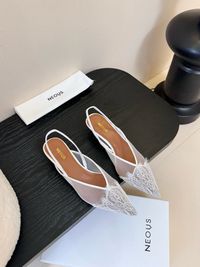
Are Neous Irena Pumps Practical for Everyday Wear?
Neous Irena pumps can work for everyday wear when the day includes controlled walking, indoor time, commuting, meals, or shorter social plans rather than hours continuously on foot. Slingback construction, mesh, heel height, and forefoot contact matter more than whether the shoe simply looks dressy.
The real test is the routine. A pair that works well from office to dinner may be less convincing for long outdoor routes or extended standing.
1. Everyday Wear Is Not One Type of Day
A shoe can look right beside everyday clothing without being suitable for every schedule.
Short commutes, desk-based work, lunch, nearby shopping, and dinner create a very different workload from several hours of uninterrupted walking.
What matters most is how much movement and standing the day actually contains.
2. The Back Strap Changes More Than the Look
A slingback leaves the heel open while using a strap to keep the shoe connected to the foot.
Security depends on strap placement, heel movement, foot proportions, and whether the strap stays where it should during walking.
Someone used to fully enclosed pumps may notice the difference quickly. Regular slingback wearers may find the transition easier because the open heel already feels familiar.
3. Front Fit Becomes More Important Over Time
The front of the shoe carries much of the load during walking, especially when the toe area is more defined.
For that reason, Neous Irena pumps should be judged by how the upper sits around the forefoot, how much room the toes have, and whether pressure develops during repeated steps rather than by appearance alone.
A fit that feels fine for ten minutes may not feel the same after commuting, standing, or several hours indoors.
Anyone planning to wear the pair for longer periods should pay close attention to the forefoot before deciding how demanding the day can be.
4. Mesh Feels Different From a Solid Upper
Mesh creates less solid coverage than a conventional leather upper, giving the front a lighter, less enclosed feel.
Softer sections may flex more easily, while reinforced edges or trim can create firmer contact in specific areas.
The visible transparency tells only part of the story. During movement, the way those edges sit against the foot can matter just as much.
5. Heel Height Becomes More Noticeable With Time
A heel that feels manageable for a meal or a few indoor hours may become harder to forget once walking time increases.
Distance, pace, stairs, and periods of standing all add to the workload.
For a mostly seated workday followed by dinner, that may still be manageable. A day built around moving between stores, transit stops, or several neighborhoods asks much more from the same construction.
6. Satin Trim Looks Refined but Deserves Care
Satin edging gives a mesh upper clearer definition and adds a more polished finish.
It also benefits from gentler use than a surface intended for rough daily wear. Repeated friction against stairs, luggage, or crowded transit can be harder on finer materials.
That does not make the pair too delicate for regular rotation, but controlled indoor settings suit it better than demanding outdoor use.
7. Not Every Commute Tests a Shoe the Same Way
Neous Irena pumps are easier to justify for a commute combining transport, short walking sections, and indoor time than for a day dominated by long-distance walking.
A car-to-office routine, rideshare journey, or short train connection creates fewer continuous steps. Crossing a city on foot for hours puts more pressure on the strap, heel, forefoot, and upper.
The word “commute” covers a wide range of routines, so the pair only needs to work for the one the wearer actually has.
8. Desk-Based Work Is a More Natural Fit
An office day can suit this type of slingback particularly well when movement is mostly between a desk, meeting room, lunch location, and nearby transport.
The shoe can still contribute to the outfit without being asked to handle constant walking.
Tailored trousers, straight-leg pants, midi skirts, and simple dresses all work here because the setting gives the shoe room to look polished without demanding too much from it physically.
9. Standing Can Be More Demanding Than Expected
Walking and standing do not place pressure on the foot in exactly the same way.
A shoe may feel secure in motion but become less forgiving after a long period spent standing. Receptions, work functions, and dinners can therefore feel different from a day broken into short periods of walking and sitting.
Heel height and forefoot pressure usually become easier to notice when there are fewer chances to change posture.
10. Weather Can Change the Decision Quickly
Mesh, lace effects, and satin trim are easier to manage in dry conditions.
Rain, wet pavement, and dust introduce practical concerns that have little to do with styling. If the forecast is uncertain or the day involves a lot of outdoor time, a more weather-tolerant pair may make more sense.
That is less a weakness than a boundary around where this construction works best.
11. Everyday Does Not Have to Mean All Day
A shoe can be worn regularly without needing to handle twelve hours on foot.
Neous Irena pumps can fit recurring situations such as office days, lunches, short appointments, dinners, indoor events, or evenings where walking stays moderate.
Someone whose routine involves long walks or extended standing most days may need a different primary pair. A more controlled schedule makes this design much easier to return to.
12. Who Will Get the Most Use From This Pair?
This design makes the most sense for someone who wants a refined slingback for work, meals, social plans, and other settings where walking remains moderate.
It is less suited to anyone looking for one pair to handle long city routes, poor weather, rough surfaces, or continuous standing.
The better question is not whether the shoe is “comfortable enough” in general. It is whether the hours, movement, surfaces, and conditions of the wearer’s normal day match what the construction does well.
For the right routine, it can become a regular dressier option instead of a pair saved only for occasional events.
Clara Bennett
Clara Bennett writes about designer shoes, focusing on materials, proportions, styling, and the small design differences that change how a pair looks and wears. Her articles look closely at individual styles and how they fit into everyday, work, and occasion dressing.