
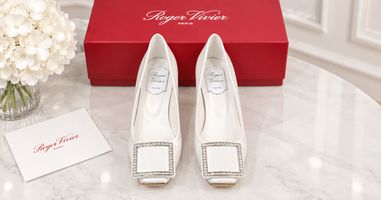
Roger Vivier Trompette Pumps: What Makes the Design Distinctive?
Roger Vivier Trompette pumps stand out because the heel contributes almost as much to the design as the upper. The flared rear profile, polished pump construction, and decorative front elements create a shoe that looks noticeably different from a conventional high heel, especially from the side and back.
Choosing between versions depends on more than heel height. Toe profile, rear support, ornament scale, material, color, and how much of the shoe remains visible below clothing all change the final effect.
1. Start by Looking Beyond the Front View
Product photography frequently emphasizes the toe, vamp, and buckle, yet much of the character appears from another angle.
The heel widens toward its base rather than following one slim vertical line. That difference becomes clearer below cropped trousers, midi hems, or dresses that leave the rear exposed.
A straight front view can therefore understate one of the design's most recognizable features.
Checking front, side, and rear views gives a better sense of how the construction reads once worn.
2. Look at How the Heel Meets the Ground
The lower part of a heel can change the stance of a pump even when overall height remains similar.
A slimmer base keeps the rear visually lighter. A wider base creates a stronger connection with the floor and makes the back of the shoe appear more substantial from certain angles.
Across Roger Vivier shoes, that lower heel treatment can be as important as the height itself when comparing how refined, architectural, or decorative a design feels.
This is easier to judge from side and rear images than from a standard front product shot.
3. Check How the Vamp Frames the Front of the Foot
The vamp determines how much of the top of the foot remains visible before the toe begins.
A higher vamp creates more continuous material across the front and can make a decorative buckle feel more integrated into the upper. A lower cut exposes more of the foot and gives the pump a lighter appearance.
The placement of the ornament matters here too.
If the buckle sits close to the topline, it can visually shorten the exposed area. If it sits farther forward, more space remains between the foot opening and the decoration.
That difference can change the balance of the entire front without altering the toe itself.
4. Crystal Coverage Changes How Much of the Upper Remains Visible
Crystal decoration does more than add shine. It changes how much of the vamp still reads as leather, fabric, or mesh around the ornament.
A compact crystal element leaves more uninterrupted upper visible, so the shoe retains a cleaner front. Denser coverage compresses that open surface and makes the decorative area feel larger.
For someone considering Roger Vivier Trompette pumps, this difference can noticeably change how formal the shoe appears even when heel height and toe profile stay the same.
Lighting strengthens the effect because tightly grouped crystals reflect across a broader area than a smaller ornament.
The useful comparison is therefore how much of the front remains visually open once the decoration is in place.
5. Toe Profile Controls the Length of the Front
A tapered toe extends the visual line of the foot and can make the upper appear slimmer and longer.
That works especially well when only the front remains visible below trousers.
A softer front reduces some of that length and can make a sculpted heel feel less dramatic.
Toe proportion also changes how hardware sits within the upper. A large buckle on a shorter vamp appears more dominant, while a longer front gives it more surrounding space.
6. Closed Pumps and Slingbacks Change the Rear View
A closed pump creates a more continuous line from the upper into the heel. More material surrounds the back of the foot, so the heel feels connected to the rest of the shoe.
A slingback removes much of that rear surface.
The exposed heel creates more contrast around the sculpted base, making its width and curve easier to notice.
Rear support changes too. A heel cup and a strap hold the foot differently, so the choice is functional as well as visual.
7. Rear Exposure Changes How the Construction Reads
The back of the shoe can look quite different depending on how much of the heel counter, strap, and base remain visible together.
With Roger Vivier Trompette, that rear relationship matters because the heel broadens toward the ground. A closed pump places more material above that widening base, while an open-back version leaves the heel visually separated from the foot.
This changes the proportion from behind.
A more exposed construction can make the heel appear wider and more pronounced, while a closed rear creates a smoother transition from foot to base.
The distinction is subtle in static front photography but clearer once the shoe is viewed from behind.
8. Material Alters the Contrast Between Features
Smooth leather gives the upper a defined, continuous surface. Hardware tends to stand out clearly against it, especially when the finish is dark or uniform.
Suede softens those transitions.
Mesh changes the result more noticeably because transparency introduces the foot into the design. The upper no longer reads as one solid surface, which can reduce some of the visual weight around large ornament.
Each material changes how strongly the toe, buckle, and heel separate from one another.
9. Crystal Placement Can Change the Apparent Size of the Vamp
Not every embellished upper distributes decoration in the same way.
Some Roger Vivier Trompette pumps concentrate crystals within a defined buckle, leaving the surrounding vamp comparatively clean. Others create a denser visual area across the front.
Concentrated decoration keeps the ornament easy to isolate visually.
Broader coverage can make the vamp appear shorter because the eye reads more of the front as one decorative block.
This becomes especially noticeable on compact uppers, where ornament occupies a larger share of the visible surface.
For someone comparing similar pumps, crystal placement can therefore matter as much as crystal quantity.
10. Instep Exposure Changes How Light the Pump Feels
The amount of visible instep affects how substantial the upper appears.
A deeper cut around the opening exposes more of the foot and can make a decorated pump feel lighter despite a sculpted heel. A higher topline creates more coverage and gives the upper greater visual weight.
This also changes how the shoe interacts with the leg.
More exposure can lengthen the visible line between ankle and toe, while additional coverage creates a firmer boundary across the front of the foot.
That difference is particularly useful when two pumps share similar hardware but feel noticeably different once worn.
11. Color Contrast Can Emphasize Different Parts of the Shoe
Instead of judging color only by how easy it is to match, look at where contrast appears.
A dark upper paired with bright crystals makes the front ornament more pronounced. A lighter upper can reduce that contrast and make the full silhouette easier to read as one unit.
Contrast between the heel and upper matters too.
If both sit close in tone, the rear construction feels more integrated. Greater contrast separates the heel visually and can make its width or flare easier to notice.
Color therefore changes not just mood, but which constructional features become easiest to read.
12. Exposure Changes Which Part of the Pump Remains Noticeable
How much of the shoe remains uncovered can shift attention between the toe, vamp, and heel.
Wide trousers may leave only the front visible for much of the time, while a shorter hem exposes the rear construction as well.
That means Roger Vivier pumps can present differently even when the shoe itself does not change.
Partial coverage tends to concentrate attention around the toe and ornament. Greater exposure lets the heel enter the composition more clearly.
For Trompette designs, that difference matters because the rear construction carries more visual character than it would on a simpler pump.
13. Compare the Complete Front-to-Back Construction
A useful final check is to stop judging the buckle, toe, and heel separately.
Look at how the vamp begins, where the ornament sits, how much instep remains visible, and how the rear construction reaches the floor.
Some versions create a strong front and quieter rear. Others distribute visual interest more evenly across the entire shoe.
Neither approach is automatically easier to wear.
The better match depends on whether you want most of the character concentrated around the vamp or carried across the full profile.
That front-to-back relationship is what ultimately separates one Trompette pump from another more clearly than any single decorative feature.
Clara Bennett
Clara Bennett writes about designer shoes, focusing on materials, proportions, styling, and the small design differences that change how a pair looks and wears. Her articles look closely at individual styles and how they fit into everyday, work, and occasion dressing.