
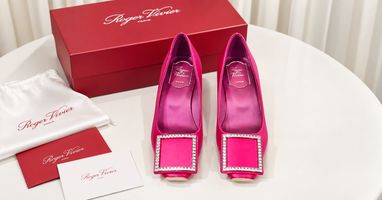
Roger Vivier Trompette Shoes: How the Design Changes Across Different Styles
Roger Vivier Trompette shoes are best understood as a design family rather than a single pump silhouette. The recognizable heel can appear beside closed uppers, slingback constructions, decorative fronts, or cleaner finishes, and each combination changes how formal, expressive, or versatile the shoe feels.
Heel character, coverage, ornament, color, and how much of the shoe remains visible beneath clothing help determine whether a design suits dinners, events, polished daytime dressing, or a more statement-focused wardrobe.
1. The Heel Creates the Family Resemblance
Different footwear styles can share the same design language without looking identical.
The Trompette heel creates that connection from the rear and side. Its wider base gives the shoe a recognizable stance even when the upper changes considerably.
A closed pump may emphasize polish and continuity, while a slingback leaves more of the rear exposed. Decorative versions add another visual layer, yet the heel keeps the styles related.
This makes the collection easier to read as a family rather than as isolated designs.
2. Upper Design Determines How Formal the Result Feels
Heel character may establish the foundation, but the upper decides how strongly the shoe leans toward evening or daytime use.
A cleaner leather upper can make Roger Vivier shoes feel more restrained even when the heel remains distinctive.
Add crystal hardware, metallic surfaces, or a sharper toe and the overall impression becomes more expressive.
For two versions sharing a similar heel, the upper may create the more meaningful difference.
3. Upper Proportion Changes How Integrated the Heel Feels
The heel can appear either closely connected to the rest of the shoe or more visually independent depending on the amount of material above it.
A fuller upper creates more surface between foot and heel, making the rear construction feel like part of one continuous object.
A lighter upper reduces that visual bridge.
As more of the foot becomes exposed, the heel can seem more separate and sculptural even when its actual dimensions have not changed.
This relationship is useful when judging how strongly the Trompette element should stand out from the rest of the design.
4. Pumps Keep the Trompette Idea More Focused
The pump format gives the heel a clear structure to work against.
A continuous upper, defined toe, and enclosed rear create a familiar foundation, so Roger Vivier Trompette pumps can introduce a sculpted heel without making every part of the shoe equally complex.
This balance matters when ornament is also present.
A crystal buckle or brighter finish may dominate from the front, while the heel appears later from the side or rear.
That sequence gives the design more depth than a pair where every feature competes immediately.
5. Ornament Changes the Mood More Than the Basic Silhouette
Two shoes can share the same construction but feel different once decoration changes.
A clean buckle keeps the upper controlled and leaves more attention on the silhouette. Crystal treatment increases reflected light and makes the front more noticeable, particularly indoors.
A restrained embellished version can still work with polished daytime clothing, while denser decoration pushes the pair toward dinners, receptions, or events.
Ornament therefore adjusts the mood without changing the underlying Trompette structure.
6. Contrast Can Either Unite the Heel or Pull It Forward
The relationship between the upper and heel matters more than either color viewed separately.
When both areas stay visually close, the Trompette base feels integrated into the full shoe. Stronger contrast makes the rear easier to isolate, so the heel reads as a more independent design element.
Texture can create the same effect even without a major color change.
A smooth upper beside a more reflective or visibly defined heel creates separation through surface treatment rather than hue.
This makes contrast useful for controlling whether the Trompette feature feels embedded in the design or deliberately emphasized.
7. The Strongest Version Depends on Where You Want the Character to Sit
Some designs place most of their character in the heel. Others divide attention between heel, front hardware, and color.
That balance matters when choosing Roger Vivier Trompette shoes, because a highly expressive upper can make the entire pair feel more event-focused, while a quieter front lets the rear construction carry more of the design.
A simpler upper can work well beside tailoring or dresses that already contain strong features. A more decorative version suits situations where the footwear is meant to stand out.
The useful choice is the one where the visual emphasis matches how prominently you want the shoe to appear.
8. Construction Determines Whether the Heel Feels Embedded or Exposed
The same Trompette base can read differently depending on how the upper reaches the rear of the foot.
More continuous construction visually carries the eye downward from upper to heel. A more open design interrupts that path and allows the rear element to stand apart.
This changes the way the heel participates in the full silhouette.
A strongly integrated heel supports the overall form quietly. A more exposed one becomes easier to notice as a separate design gesture.
That distinction helps explain why the same family element can feel restrained in one style and much more pronounced in another.
9. A Quieter Upper Can Make the Heel More Distinctive
More decoration does not always create a stronger Trompette identity.
When the upper stays simple, the heel becomes easier to recognize because fewer elements compete for attention.
This can be especially effective in neutral leather.
A restrained front also works more easily beside clothing that already includes texture, pattern, or jewelry.
For someone drawn primarily to the Trompette construction, a cleaner upper may express that preference more clearly than a version dominated by crystals or bright color.
10. Repetition Builds the Trompette Identity
A single distinctive heel can attract attention, but repetition across several design elements creates a stronger family resemblance.
Within Roger Vivier Trompette shoes, the rear construction may remain consistent while upper coverage, ornament, and front proportion change around it.
That recurring heel profile gives otherwise different styles a shared visual reference.
The result is less about one dramatic feature and more about recognizing the same design language in several forms.
This is what allows a cleaner style and a more decorative one to feel related without needing identical uppers.
11. Consider Which Feature You Want to Notice From a Distance
Close-up photography can make small differences in hardware and material seem more important than they appear once the shoe is worn.
From several steps away, silhouette, contrast, and heel stance usually become easier to notice than fine surface treatment.
This is useful when two versions look very similar online.
A subtle decorative difference may fade in normal wear, while a clearer change in heel exposure or upper coverage can remain visible.
12. The Series Works Best When Heel and Upper Share the Same Intent
The heel may define the Trompette family, but the upper determines how that character is expressed.
Roger Vivier pumps with cleaner surfaces can make the sculpted heel feel refined and controlled, while more decorative versions move the same idea toward stronger occasion dressing.
The most coherent designs are not necessarily the simplest or the most ornate.
Heel, upper, color, and ornament work best when they support the same degree of visual presence rather than pull the shoe in different directions.
Clara Bennett
Clara Bennett writes about designer shoes, focusing on materials, proportions, styling, and the small design differences that change how a pair looks and wears. Her articles look closely at individual styles and how they fit into everyday, work, and occasion dressing.