
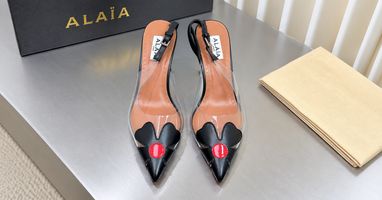
Alaïa Slingback Pumps: A Closer Look at the Le Cœur Design
A pointed front, open heel, slim strap, and distinctive heart motif give Alaïa slingback pumps a balance between classic dress footwear and a more expressive evening design.
Much of the character comes from contrast. Attention gathers near the toe, while the open rear removes some of the visual mass associated with a closed pump.
That relationship between front and back affects how the pair reads from different angles, which makes proportion as important as color or finish.
1. The Front Sets the First Impression
The pointed toe creates a long line before the heart motif becomes the main focus. From a distance, the shoe first appears streamlined; closer up, the decorative front changes its character.
Cropped trousers expose more of the toe, while longer hems reveal only part of the front. Dresses and skirts show the full construction, giving the motif greater presence.
The effect therefore changes according to how much of the shoe remains visible.
2. The Open Heel Keeps the Profile Lighter
A closed pump creates one continuous line from toe to heel. A slingback interrupts that line behind the foot, leaving more skin visible and reducing the amount of material seen from the side.
The slim strap defines the rear without producing the heavier outline of a full heel counter.
That difference is especially clear from side and three-quarter views, where the pointed front and exposed heel create two very different visual zones.
3. The Le Cœur Motif Changes the Visual Center
Decoration near the front changes where attention lands. Heel height and toe length remain important, but neither becomes the dominant feature.
Instead, Alaïa Le Cœur slingback pumps concentrate most of their character around the upper front while leaving the sides and rear comparatively restrained.
That concentration helps the motif remain recognizable without requiring additional ornament elsewhere on the shoe.
Straight skirts, simple dresses, and controlled tailoring give the front feature enough room to register clearly.
4. The Toe Creates a Longer Lower Line
The pointed front does more than change how the shoe looks from above. It extends the lower outline beyond the foot and creates a longer finishing line below the ankle.
This becomes especially noticeable when the shoe is viewed beside straight trouser legs or narrow skirt hems.
A rounded or square toe would stop that line earlier. Here, the front continues forward before ending, which gives the shoe a sharper profile even when most of the upper remains understated.
The effect is structural rather than purely decorative, so it remains visible even when the heart element is partly covered.
5. Patent and Smooth Finishes Affect the Mood
Surface finish can shift the pair from restrained to more noticeable before color even enters the decision.
Gloss catches light quickly and makes the front decoration easier to notice. A smoother, less reflective surface places greater emphasis on the outline.
Material treatment therefore changes how Alaia slingback pumps behave beside satin, wool, denim, or structured tailoring.
Matching textures is unnecessary. A controlled contrast between clothing and footwear can give both surfaces more definition.
6. Side Views Reveal the Construction Best
The shoe looks different from the front than it does from the side.
From straight ahead, the pointed toe and heart motif dominate. Turn slightly, and the gap behind the heel becomes more important, while the strap creates a thin horizontal interruption across the rear.
This angle also shows how little material connects the front and back visually.
That separation is one of the features that distinguishes the design from a conventional closed pump. It gives the shoe a lighter side profile even though the front carries a strong decorative element.
7. A Clean Outfit Lets the Front Detail Work Harder
A recognizable shoe does not require equally decorative clothing.
Simple trousers, a fitted knit, a column dress, or a plain skirt can provide enough contrast for the footwear to become the main focal element.
Alaïa slingback pumps keep their strongest feature near the front, so they work particularly well beside pieces with fewer competing accents.
Texture, jewelry, or a structured bag can still add interest. Spacing those elements around the outfit prevents too much visual activity from gathering in one area.
For dressier settings, one or two clear focal features usually create a cleaner result than several strong motifs close together.
8. Shorter Hems Put More Emphasis on the Heel
Mini skirts and shorter dresses expose almost the complete shoe.
The slingback strap becomes easier to notice, as does the transition from upper to heel. The rear construction therefore carries more visual weight than it does beneath longer clothing.
Bare legs create greater separation between garment and footwear, while tights form a more continuous vertical line.
This makes shorter hems particularly useful for showing the front-to-back contrast built into the design.
9. Color Determines How Quickly the Shoe Is Noticed
Black creates strong definition beside lighter clothing or exposed skin. A lighter shade softens that contrast and makes the pointed profile less forceful.
Deep red and similar tones introduce more visual weight without relying entirely on gloss or ornament.
Color matching is not essential. Using the shoe as the only saturated element can make its form clearer, while repeating a related tone elsewhere creates a subtler connection.
A restrained surrounding palette usually leaves more room for the heart motif to remain distinct.
10. The Pair Changes Character With Fabric Weight
Heavy fabrics and fluid fabrics frame this shoe differently.
Wool trousers, dense tailoring, or thicker skirts create a stronger material contrast against the exposed heel. Lighter fabrics allow the shoe to feel more continuous with the rest of the look.
That difference can be useful when styling Alaïa Le Cœur pumps outside formal evening settings. A fine knit and tailored trouser produce one effect; a flowing dress produces another.
The shoe itself remains unchanged, but the surrounding fabric determines whether it reads sharper, softer, or more decorative.
For a closer look at the specific construction and design details, explore the Le Cœur style analysis.
11. Bags Do Not Need to Repeat the Heart Motif
A recognizable decorative element does not need to appear again elsewhere.
A clean shoulder bag, compact top-handle style, or simple clutch can support the shoe without competing against the front feature.
Strong hardware on both footwear and bag can make the lower half of an outfit feel busier, so keeping one accessory quieter usually improves separation.
Matching the bag to the clothing rather than the shoe can also prevent the accessories from looking overly coordinated.
12. The Best View Is Not Always From the Front
This design rewards movement because different features become noticeable from different angles.
Walking brings the slingback strap into view, then shifts attention back toward the pointed front as the foot moves forward. Sitting exposes more of the side construction and heel opening.
That changing perspective is important because the shoe does not depend on one decorative surface.
The front motif provides recognition, while the open rear and slim strap become clearer once the wearer moves. This gives the pair more dimensional interest than a shoe whose strongest feature is visible only from straight ahead.
13. Who Will Get the Most Use From This Pair?
Someone who wants a pointed dress shoe with a recognizable front feature, but not decoration spread throughout the whole design, is likely to get the most from this pair.
Wardrobes built around tailoring, skirts, dresses, and cleaner silhouettes provide enough visual space for the heart motif and open heel to remain distinct.
Very long trousers conceal more of the construction, although the toe can still appear beneath the hem.
For someone who prefers footwear that can shift between restrained daytime dressing and more decorative evening combinations, Alaïa slingback pumps offer that flexibility through proportion rather than excessive ornament.
Clara Bennett
Clara Bennett writes about designer shoes, focusing on materials, proportions, styling, and the small design differences that change how a pair looks and wears. Her articles look closely at individual styles and how they fit into everyday, work, and occasion dressing.